


AQM – Air Quality Monitor - er en VOC monitor udviklet i Danmark, til overvågning af indeklimaet i omgivelser hvor der arbejdes med kemiske dampe og partikler.
AQM er yderst effektiv. Monitor har effektiv indsugning i instrumenthuset, hvorved der opnås meget tidlig registrering af indeklima kontaminering og forurening. Monitor har flg. dimensioner; 18 cm x 12cm x 8 cm, og kan let placeres i det miljø hvor indeklima skal overvåges.
AQM, produceres i 5 versioner;
- AQM – P; partikel måling
- AQM - CO
- AQM – CO2
- AQM – F; CH2O Formaldehyde / VOC
- AQM – A; Ammoniak.
- AQM – P; måling af partikler. Fuldt udslag 1000 µg/m3. Partikel sensor har høj stabilitet. Mindste partikel str. 0,3 µg/m3.. Måleværdi er gennemsnit ved PM2.5
- AQM - F CH2O Formaldehyd / V.O.C Monitor måler indeklimaet og registrerer kontaminering på grundlag af elektrokemisk sensor i høj kvalitet. Kompensation for temperatur og humiditet, giver optimal registrering. Høj opløsning og long Life sensor, med god stabilitet. Max. udslag ved 5ppm. Dette er en V.O.C-sensor, og andre V.O.C dampe eller tåger bliver registreret i en målbar omsætning. Benzen, Toluen, Ethanol, Hydrogen og CO. I omgivelser hvor der findes Alkohol og sprit i indeklimaet kan måling af Formaldehyd blive forstyrret.
- AQM – CO2; Max udslag ved 5000 ppm
- AQM – CO; Max udslag ved 500 ppm.
- AQM – A; Ammoniak.
Isoflurane
ISOFLURANE is the most commonly used inhalation anesthetic for experimental use in mice and is preferred when mice need to be anesthetized for longer periods. Usu- ally the ISOFLURANE concentration is 1,5%. ISOFLURANE is always administered in conjunction with air and / or pure oxygen. In earlier years ethers was the preferred gas used for anesthetics, however ETHERS are highly flammable and therefore ISOFLURANE is preferred, being considered a stable non - explosive inhalation anes- thetic. ISOFLURANE is also preferred, as the effect of anesthesia diminishes very rapidly after end of use. When used in laboratories for anesthesia of small animals, animals will wake up 2 - 5 minutes after end of use. ISOFLURANE utilizes a bypass vaporizer. The vaporizer change the ISOFLURANE fluid to ISOFLURANE vapor, and deliver a controlled amount to patient.
ISOFLURANE is supposed to remain in the anaesthetic system to be used for operati- on of the patient, larger animals or research on small animals. It is not supposed to escape the system. Nevertheless, it is very difficult to avoid that small amount of ISOFLURANE vapour slips out of the system. Doctors and staff in the laboratory must avoid long term exposure to ISOFLURANE. If ISOFLURANE escape the system it will cause operator drowsiness, and possible discomfort.
Laboratories using ISOFLURANE are usually equipped with ventilation systems, with high airflow, and often also point ventilation with suction / excavation close to the operators.
Also in well ventilated rooms, ISOFLURANE can often be detected by smell. After longer period of use, some ISOFLURANE escape the system. How much and where the vapour is concentrated in the room is difficult to determine. AQM 1 is the suitab- le instrument to give information. When laboratory workers complain they smell ISOFLURANE, the level has already reached above > 1200 PPM. And this happen regularly.
Veterinary anesthesia performed on animals by a veterinarian. Anesthesia is used for a wider range of circumstances in animals than in people, due to animals' inabil- ity to cooperate with diagnostic or therapeutic procedures. Veterinary anesthesia includes anesthesia of the major species: dogs, cats, horses, cattle, sheep, goats, and pigs, as well as all other animals requiring veterinary care such as birds pets, and wildlife.
Anesthesia is required for many surgical procedures which require the patient to be immobile, unaware, and without pain.
Furthermore, anesthesia aims to minimize the surgical stress response. In addition, certain diagnostic procedures require anes- thesia, notably stomach or airway endoscopy, bone marrow sampling, and occasion- ally ultrasound. Aggressive animals may require anesthesia in order to handle and perform a physical exam or obtain blood for testing. Exotic animals frequently re- quire anesthesia for simple procedures (such as taking a radiograph or catheter placement) due to lack of domesticity. Animals may require anesthesia for therapeu- tic procedures, such as urinary catheterization to relieve obstruction, injection into a mass, or removing fluid from the eye to treat glaucoma.
Cats and dogs are frequently anesthetized for surgical procedures. Small animals are most often placed under general anesthesia due to the types of procedures typically performed, the small size of the patient, their suitability to general anesthesia, and the greater degree of control.
AQM 1 Streaming of data
CONDA AQM 1 vapour monitor, is basically a gas detector with ad- vanced software. In most installations the instrument will serve its purpose, to monitor the level of vapour in the laboratory, and activa- te alarm when a critical alarm level is registered.
In the development of the instrument, we have designed the soft- ware to stream data continuosly, if connected to a PC.
The instru- ment streams data with the option to be stored in Excel etc. for data- logging and data storage. In some installations it serves a purpose to register if the level of ISOFLURANE increases over time, during longer period of laboratory work. It may also serve a purpose to mo- nitor where in the laboratory gas vapour rise, to determine the need to increase ventilation and air flow in the laboratory. Eventually it will be learned how laboratory workers administrate the anesthetic sy- stem, and avoid escape of ISOFLURANE.
AQM 1 react very fast - usually within 30 sec. when exposed to ISOFLURANE vapour. The advantage is, that the operator gain im- mediate knowledge, why and from where ISOFLURANE escaped the system. He will learn the system, and he will learn handling the system to avoid escape of ISOFLURANE. Constant monitoring is not only a precaution for safety and protection to keep a safety level of ISOFLURANE in the laboratory, it is also a proactive educational tool - to teach and educate operators to handle anaesthetic systems correctly and avoid leakage.
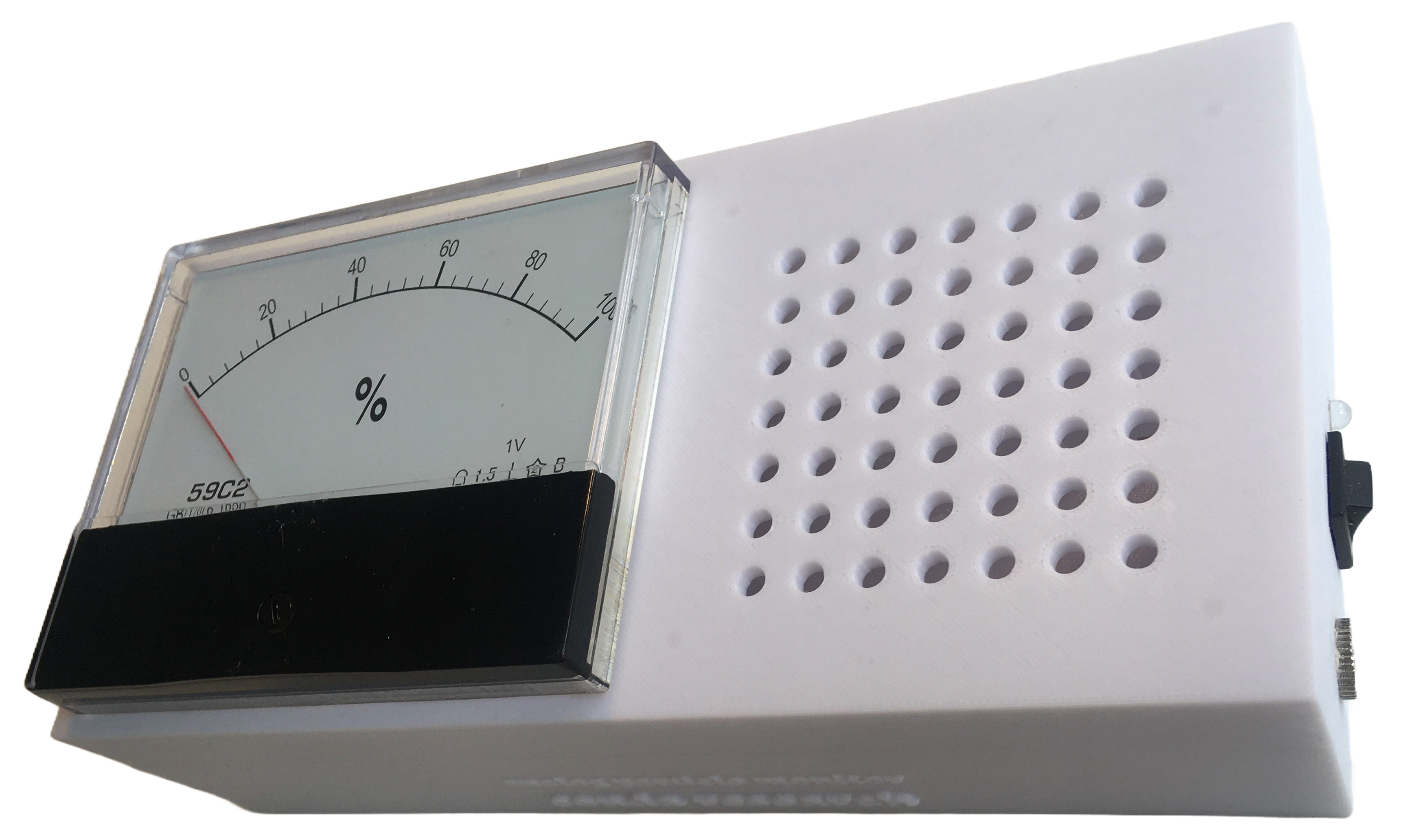
Networking AQM 1 monitors.
In larger premises with several laboratories or points of operations, AQM 1 can be connected in network to one PC, logging data with individuel nodes. Each instrument can have an individuel set-up, to match the position of the instrument in the laboratory. The software has build-in protection with password for laboratory manager, to log- in on any individuel instrument in the network and change certain factory setting.
AQM 1 is a reasonable priced instrument compared to other instru- mentation on the market - suitable for ISOFLURANE detection. In the design of AQM 1, it had high priority to utilise cost optimised solutions to keep the instrument within the finansiel limits of labora- tories. We hope that we have suceeded to match the finansiel ex- pectations of end users, though cost of instrument should not be a deciding factor. Laboratories exposed to ISOFLURANE, working with anestehsia will find that a relative small investment in protecti- on, adds quality in daily handling to laboratory workers and the me- dical staff.